


Light Ignite - Laser Puzzle
4.22.12K Reviews
App Specs
- Version
- 15.5
- Updated On
- License
- Free
- Downloads
- 1,000,000+
- Developer
- Branching Factor
- Categories
- Puzzle
- Platform
- Android
Screenshots
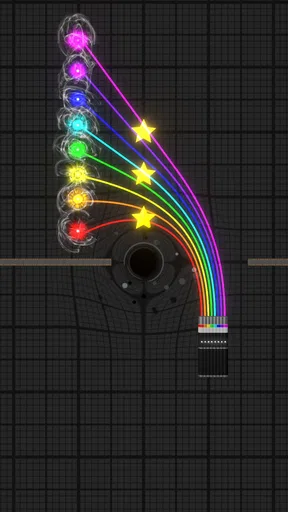
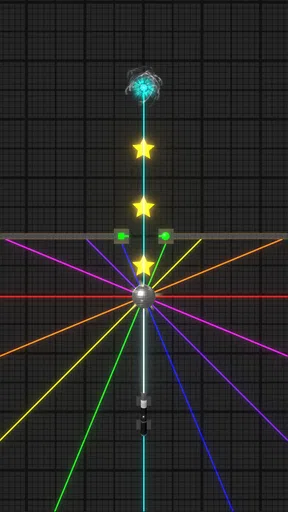
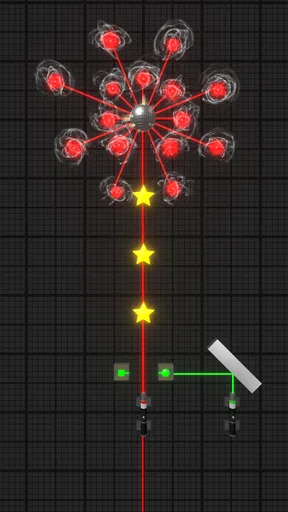
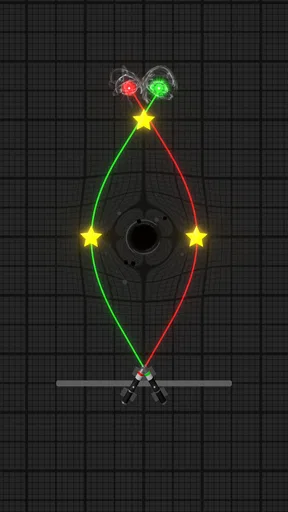
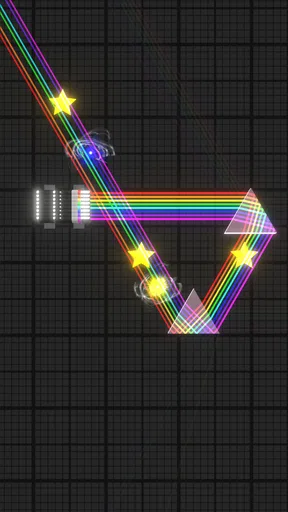

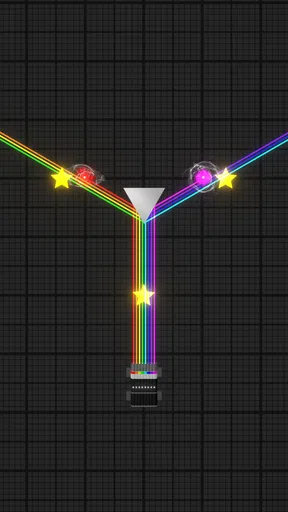
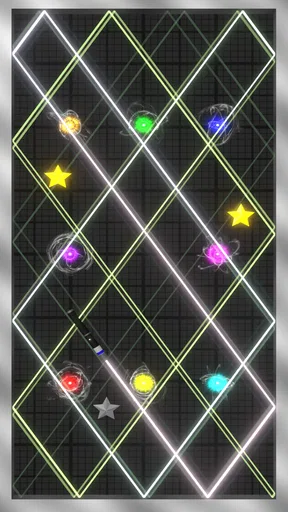
 Analysis by AppCompare
I like puzzle games that make me pause and test an idea rather than simply tap through a familiar routine. Light Ignite - Laser Puzzle is built around that kind of thinking: its central appeal is working with light and physics to find a solution. It is a focused premise, and a good fit when I want a compact mental challenge rather than a story-heavy game or a rapid stream of action.
Small-session play without a rush
What makes this game especially easy to fit into an ordinary day is that I can approach a puzzle in a few distinct passes. I might first scan the board, then try one idea, and leave the screen for a moment before deciding what to change. That makes it a reasonable choice for a quiet coffee break or a pause while waiting for someone: I can engage with a problem without needing to set aside a long block of time.
There is a useful trade-off here. Short sessions work best when I am willing to leave an unsolved level alone rather than forcing a quick answer. If I have only a minute and feel impatient, I may get more from a familiar word puzzle with a simple prompt. If I have enough attention to examine how light could move through the setup, this game offers a more distinctive kind of mental reset.
Thinking in beams, not rushing through levels
I find that light-based puzzles reward a different habit than quick pattern games: before changing anything, I try to picture what the board is asking me to make happen. That small pause can turn a frustrating guess into a useful test, even when I do not solve the level immediately. Next, I look at how this deliberate approach shapes the pace of play.
A puzzle pace that rewards a second look
The game’s light-based focus gives each challenge a different feel from the usual word, number, or match puzzles. Instead of searching for a word or spotting a color pattern, I approach a board by considering how light might travel and what changes could make it reach the intended result. That shift is the point: a move can look plausible at first and still fail, so the satisfying part is revising the plan.
I would not choose it expecting twitch reflexes or a race against the clock. The appeal is closer to a small logic problem that I can inspect, try, and reconsider. If I am playing in a short break, that deliberate pace is useful: I can give a level a few minutes, stop when I need to, and return with a fresh perspective. For anyone who finds ordinary puzzle games too repetitive, reasoning about light offers a more unusual theme to work with.
There is a trade-off, though. A physics-based puzzle can feel opaque when I do not understand what the board expects me to notice. In those moments, trying random moves is less rewarding than asking what each change is meant to test. I recommend approaching a difficult screen as an experiment: make one deliberate adjustment, observe the result, then change one thing at a time. That keeps the puzzle legible and makes a successful solution feel earned.
Worth Reading Before You Choose

EA SPORTS FC Mobile 26 Is a Bigger Football Game, but It Takes Time

Flipboard Shows What News Apps Must Do Beyond the Feed

Switching to Android Auto Means Rethinking Your Driving Routine

Google Calendar Makes a Crowded Week Easier to Manage

Ludo King Makes the Most of the Minutes Between Plans

Baby Panda World Brings Quick Play to Modern Phones, but Its Game Library Feels Busy
How it fits into a real day
A realistic use case is a quiet wait between errands. I can open a level, study the arrangement, and work through a couple of possibilities without needing to follow a complicated plot or remember a long chain of instructions. It also suits a short wind-down session when I want something more engaging than scrolling but less demanding than a competitive game. The best rhythm is not necessarily to clear as much as possible; it is to give each problem enough attention to see why a solution works.
That makes it a stronger choice for patient players than for people who want an instant reward every few seconds. If I am tired and only want a game that plays itself through familiar gestures, this may not be the right pick. The central pleasure depends on engaging with the puzzle, not merely collecting quick wins.
What to expect from the pace
Because the core idea asks for observation and reasoning, I would set expectations around mental pace rather than device speed. The game is a puzzle title from Branching Factor, and its store summary centers on playing with the physics of light. That tells me what kind of experience to expect, but it does not justify assuming every level has the same difficulty or that progress will feel uniformly smooth. Some screens may click quickly; others are likely to take more thought simply because their arrangement is harder to interpret.
When a level stalls, I find it more useful to pause than to keep tapping in frustration. A quick reset of my thinking—look at the goal, trace the possible route, and identify what is blocking it—can be more productive than repeating an unexamined move. This is a small but important distinction from many casual puzzle games: the most useful “shortcut” is often a clearer hypothesis, not faster input.
Longer sessions and moments of friction
For a longer play session, the main question is whether I still enjoy studying one puzzle after another. The light-and-physics theme gives the game a recognizable identity, but a focused puzzle concept can also become mentally tiring if I keep pushing through when my attention has faded. I would use short pauses between tricky screens rather than treating it as a game that must be played in one sitting. Returning later can make a stuck problem easier to see because I am no longer locked into the same assumption.
One practical approach is to avoid changing several things at once. If I alter multiple parts of a setup and the result improves, I may not know which change mattered. Testing one adjustment at a time makes the relationship between action and outcome clearer. It can feel slower, but it helps me learn the puzzle’s logic and reduces the sense that success came from luck. This is especially helpful when a level’s visual arrangement tempts me to make a quick guess.
The flip side is that deliberate testing can become repetitive if I am not in the mood to reason. A player who prefers direct instructions, a steady narrative, or a clear sense of progression may find a light puzzle less compelling than a conventional adventure or a straightforward match game. I would choose this one for the act of solving, not as a general-purpose game for every mood.
Reliability and returning to a puzzle
I judge reliability in a puzzle game by whether I can focus on the problem rather than fighting the experience around it. I have no reason to promise a particular loading speed, crash rate, or recovery behavior, so I would not treat those as guaranteed strengths. The sensible expectation is to approach it as a focused single-player puzzle experience and see how it behaves on the device in hand. If a session is interrupted, it is worth checking that the current level remains available before relying on the game for a longer stretch of play.
For a stuck puzzle, the best recovery is often conceptual rather than technical. I can step away, then return and trace the light path from the beginning instead of assuming my last attempt was almost right. If I am using the game during a commute or another stop-and-start part of the day, I would favor short sessions and avoid beginning a puzzle when I know I will have to leave immediately. That is a practical way to protect the fun from interruptions without assuming anything about automatic saving or background behavior.
The game has an average rating of 4.2 from around 43,000 ratings, with roughly 2,100 written reviews. More than a million installs show that it has reached a substantial audience, but popularity alone does not tell me whether its particular style will suit you. I read those figures as context: plenty of players have tried it, while the decision still comes down to whether you enjoy patient, visual problem-solving.
Device fit and sensible expectations
The game is free and rated Everyone, so it is accessible to a broad audience on those basic terms. Its current version is 15.5, and it supports devices running Android 7.1 or later. Those details help with the first compatibility check, but they do not tell me how much battery or memory a specific session uses. I would avoid assuming it is especially light or demanding without testing it on the device I plan to use.
If you are deciding whether an older phone or tablet is suitable, the operating-system requirement is the clearest starting point: make sure the device meets it, then try a brief session before committing to a longer one. The same advice applies if you are sensitive to heat or battery drain. A short real-world check is more useful than an unsupported promise about resource use. For a puzzle game, a comfortable screen and responsive touch input are also worth considering, since careful visual inspection is part of the experience.
Compared with common alternatives in the puzzle category, Light Ignite has a narrower, more physical idea than word games or number grids. Those can be better when you want a familiar rule set or quick rounds that require little visual interpretation. A match-style puzzle may suit someone seeking immediate, repetitive actions; a narrative puzzle may be a better choice for a player who wants character and story to carry the session. Here, the attraction is specifically the challenge of reasoning about light, so its focus is both its identity and its limitation.
Who I would recommend it to
I would recommend Light Ignite - Laser Puzzle to anyone who enjoys visual logic challenges and is willing to test a solution instead of expecting the answer to be obvious. It can work well for a quiet break, a short evening session, or a moment when I want to give my attention to one contained problem. The free entry point makes it easy to try, and the Everyone age rating makes its intended audience broad.
I would skip it if I mainly want fast action, a strong narrative, or puzzles that explain every step clearly. It is also a less natural fit if I dislike pausing to rethink a failed attempt. In those cases, a more familiar word or match puzzle may deliver the lighter, more automatic session I want. The right question is not whether light-based puzzles are universally better; it is whether that particular way of thinking sounds enjoyable to you.
A practical way to approach tricky boards
When I cannot see a route immediately, I try to separate observation from action. First I identify the intended outcome, then I follow the visible possibilities without touching anything. Only after that do I make a change. This is more than a patience trick: it helps me notice whether I have misunderstood the goal or simply overlooked a route, and it keeps an unsuccessful attempt informative instead of arbitrary.
It also changes how I judge progress. A level that takes several tries is not necessarily wasting time if each attempt rules out one possibility. But if I find myself repeating the same adjustment without learning anything, I take that as a sign to stop and reset my approach. Players who enjoy this kind of self-directed experimentation will likely appreciate the game more than players who want hints to steer them at every impasse.
My performance verdict
As a performance-conscious choice, I would describe this as a game whose appeal is mental rather than technical: its distinctive hook is using the behavior of light as the basis for puzzle-solving. I would not infer guaranteed speed, stability, or low resource use from that premise. Instead, I would check compatibility, open it for a short test, and judge the experience on my own device before settling into a long session.
My overall recommendation is positive but specific. Branching Factor has a clear puzzle concept here, and it suits players who enjoy careful observation, controlled experimentation, and the satisfaction of discovering why a setup works. Its measured pace and focused theme will not match every player or every moment. If you want a thoughtful alternative to word, number, and matching puzzles—and do not mind a screen that makes you stop and reason—this is worth trying. If you want constant motion or a more guided experience, I would look elsewhere.
Final fit for different players
I see this as a better choice for someone who likes to understand a puzzle than for someone who simply wants to fill every spare moment with easy taps. It is particularly appealing when I want a visually grounded logic task and have enough quiet to concentrate. For a family member who prefers calm games, the Everyone rating and straightforward central idea may make it approachable, although the enjoyment still depends on being comfortable with trial, observation, and reconsideration.
The practical decision is simple: check that your Android device meets the stated system requirement, try a short session, and notice whether the light-based problems make you curious or impatient. If the first few moments leave you wanting to test another possibility, the game has found its audience in you. If you would rather have a story, constant feedback, or quick pattern-matching, choosing another kind of puzzle is not a loss; it is a better match for the way you want to play.
Pros
- Easy to understand the basic laser-and-mirror mechanics.
- Short levels make it convenient for quick play sessions.
- Experimenting with beam paths encourages logical thinking.
- A straightforward objective keeps puzzles focused.
- Suitable for players who enjoy spatial problem-solving.
Cons
- Some solutions may depend on trial and error.
- Later puzzles can feel repetitive if mechanics do not vary enough.
- Small elements may be harder to tap accurately on compact screens.
- Players looking for a story or character progression may find it sparse.
- Puzzle difficulty may feel uneven from one level to the next.
FAQs for Light Ignite - Laser Puzzle
What is Light Ignite - Laser Puzzle?
Light Ignite - Laser Puzzle is a logic game built around directing laser beams to illuminate targets. Its puzzles typically ask you to work out how light should travel through a level, using the objects provided to guide or redirect the beam. The central appeal is thoughtful problem-solving rather than fast reactions, making it a suitable option for players who enjoy compact brain teasers.
How do you play Light Ignite - Laser Puzzle?
Each puzzle presents a laser source and one or more targets that need to be lit. You interact with the pieces or devices in the level to adjust the beam’s route, then check whether the light reaches the required targets. The precise controls and available mechanics can vary by level, so reading any on-screen instructions is useful, particularly when a new type of object appears.
Is Light Ignite - Laser Puzzle suitable for children and beginners?
The basic idea of routing a beam is straightforward, so new players can usually understand the objective quickly. Later puzzles may require more careful planning and trial and error, which can make the game challenging for younger children or anyone unfamiliar with logic puzzles. Because difficulty and content can differ between versions, check the store listing and parental guidance information before installing it for a child.
Does Light Ignite - Laser Puzzle require an internet connection, and is it free?
Whether the game works offline and whether it is free to download depend on the version and platform offered in your region. Some puzzle games allow levels to be played without a connection, while ads, optional purchases, or other features may need internet access. Before downloading, review the current Google Play or App Store listing for pricing, in-app purchases, advertising, and connectivity details.
What should I check before downloading Light Ignite - Laser Puzzle?
Confirm that the app is available for your device and that your operating system meets the version requirements shown on the official store page. It is also worth checking recent reviews, update history, developer information, permissions, and any disclosed data practices. These details can change over time or differ between Android and iOS, so the current listing is the most reliable source before installation.


